
Most sourcing conversations start the same way. A buyer sends a link — an Amazon listing, a TikTok product page, a competitor's SKU — and asks: "Can you make this, and what does it cost?" That is supplier search, and it is what Alibaba was built for. The search box works because somebody already knows what to type into it.
The harder conversation starts with no link at all. A UK retailer wants a gift range for Q4 that is not the same candle set everyone stocks. An Amazon seller sees their main SKU flatten out and wants a second product in the same aisle. A US wholesaler keeps hearing about a category from customers but has never seen a listing worth copying. These buyers do not have a product to search for. They have a shelf, a price band, and a customer — and the product that fills it may not exist as a listing yet.
That gap between "I know my customer" and "I know the SKU" is what product discovery actually is. This guide covers where new products surface in China before they become saturated marketplace listings, how to screen an opportunity in one pass, and how to turn a discovered product into a real quotation and a first order. It is the complement to our guide on judging whether a product can win: that article asks "is there demand?" — this one asks "where does the product come from, and how do I get to it first?"
One honest example from our own ranking snapshots shows why this matters. A clear perforated shrink band for glass jars — about as unglamorous as products get — had been listed on Amazon US since December 2015. It sat at #14 in our 27 October snapshot of the hot sellers chart. Six days later it was #2, carried up by the Q4 preserving and gifting season. Nothing about the product changed. Buyers who only search for "new products" would never have looked at it; buyers who understood the seasonal shelf it fills were watching it months earlier. Discovery is not the same thing as novelty.

Where New Products Actually Surface in China
New products do not appear evenly across the internet. They surface in specific places, each with its own rhythm, and each blind in its own way.
Manufacturer new releases. Factories develop products on their own schedule — a new mold, a revised mechanism, a material swap — and show them to buyers they already know before the product ever reaches a marketplace listing. By the time a new product is easy to find online, the factory has usually sold it to someone. The buyers who see it first are the ones standing in the factory or the fair hall, or working with someone who is.
Trade fairs. The Canton Fair in Guangzhou runs twice a year and remains the single largest concentration of supplier new releases anywhere. Sector fairs — hardware, housewares, gifts, textiles — surface category-specific launches in smaller rooms where it is easier to actually talk to the exhibitor. Fairs are where you can pick a product up, work the mechanism, and ask the salesperson what changed from last season. The limits are cadence and cost: twice a year, plus travel, and a booth at a fair is a marketing expense that trading companies buy too — exhibiting does not prove manufacturing.
Wholesale markets. Yiwu in Zhejiang is the best-known example: tens of thousands of stalls covering small commodities, where trends show up as physical inventory on a shelf months before they are well-represented online. Walking the aisles shows you what is moving in volume right now. The trade-off is that stalls are usually sellers, not makers, so unit prices are good but production capability and quality control sit a step further away.
Industrial belts. China's manufacturing is geographically clustered — consumer electronics around Shenzhen, hardware and tools around Yongkang, textiles around Nantong, ceramics around Chaozhou. Inside a belt, the factories that make a category are within an hour of each other, which is why a serious product investigation usually ends with a factory visit. Reaching the right factories inside a belt typically requires local language and existing relationships, which is exactly where most overseas buyers hit a wall.
Online wholesale platforms. Alibaba and 1688 are indispensable inputs — 1688 especially, because it is where the domestic wholesale market actually trades, at prices closer to the factory floor. But both are indexes of listings, and listings lag the factory floor by months. They are also full of trading companies posing as factories, which matters when your product needs custom work.
No single channel wins. Each one tells you something and hides something else:
| Channel | Best for | What it cannot tell you |
|---|---|---|
| Online platforms (Alibaba, 1688) | Breadth, price bands, fast shortlisting | Who actually manufactures; what is new vs. oversold |
| Trade fairs (Canton Fair, sector fairs) | New releases, face-to-face evaluation, MOQ negotiation | Year-round availability; whether the exhibitor makes anything |
| Wholesale markets (Yiwu, Guangzhou) | Current assortments, packaging, accessories | Production capability behind the stall |
| Industrial belts | Factory-direct sourcing, custom work, tooling | Access without language and local relationships |
| Ranking and trend data | Demand signals and timing | Whether any factory can build it well |
This is why discovery works best as a funnel rather than a search: platforms give you breadth cheaply, data tells you timing, and fairs, markets and factory visits confirm who can actually build the thing.

How to Screen a Product Opportunity in One Pass
Discovery produces candidates. Screening decides which ones deserve a supplier conversation. Run every candidate through the same eight questions — on paper, before anyone sends an inquiry:
- Use case. Who buys this, for what moment, and what would make them replace it? A product without a repeat or gifting trigger lives and dies on impulse traffic.
- Differentiation. What exactly is different from what is already on the shelf — material, mechanism, size, packaging, bundling? "Different" that a shopper cannot see in two seconds is not differentiation; it is a footnote.
- Materials and structure. What is it made of, how is it joined, and which part fails first? The failure point predicts your return rate before any factory quotes.
- Function. Does it survive its first real use? Not the demo — the third time a customer uses it with cold hands in a hurry.
- Target purchasing cost. Work backwards: your retail price, minus marketplace fees, freight, returns and margin. That leaves the ceiling a supplier quote has to beat. Arriving at negotiations with this number is what separates buyers from browsers.
- MOQ. Whatever the unit economics say, the order is the MOQ times the unit cost, in cash, before the first sale. Can you sell through it? If not, the product is wrong for you at any price.
- Packaging and freight. Bulky light goods pay for air. Ask for packed dimensions and weight early — freight can quietly exceed product cost.
- Target market requirements. Which documents does your destination market expect for this category — food contact, electrical safety, flammability, labeling? Requirements vary by product and destination, and they need to be checked for the specific model, not assumed from a similar item.
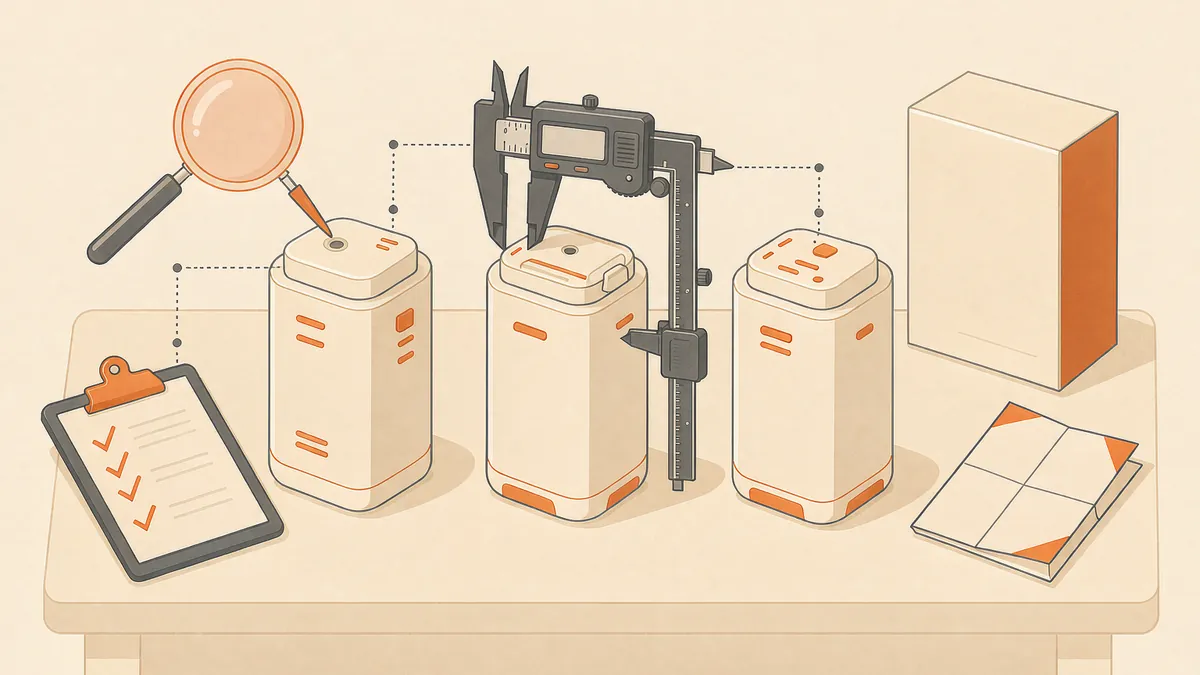
A candidate that passes six or more of these cleanly has earned a supplier search. One that fails on cost, MOQ or compliance was a cheap lesson.
From Discovered Product to Real Quotation
This is the step most discovery content skips, and it is the one that decides whether the product ever ships.
1. Shortlist ruthlessly. Three to five candidates, not thirty. A discovery process that ends with a spreadsheet of forty links has moved the problem, not solved it.
2. Write the spec sheet. This is the currency of serious sourcing: dimensions, materials, weights, colors, packaging, target market, the documents you will need. A spec sheet does not need to be perfect — it needs to be specific enough that two factories quoting against it produce numbers you can compare. Without it, every quote you receive is priced against a different imaginary product.
3. Match suppliers to the spec. For each candidate, the question is not "who sells this" but "who makes this, or is close enough to the mold to modify it." Trading companies are not automatically wrong — some add real value for complex orders — but you want to know which one you are talking to before you compare prices.
4. Request quotations against the same sheet. Send the identical spec to each supplier: quantity bands, target cost, destination market, packaging. Comparable quotes are the entire point; a cheaper number quoted against a thinner spec is not a saving.
5. Evaluate samples against the spec, not against hope. The sample answers whether the factory read your sheet. We keep a separate guide on evaluating samples before a bulk order and another on how sample costs relate to bulk pricing.
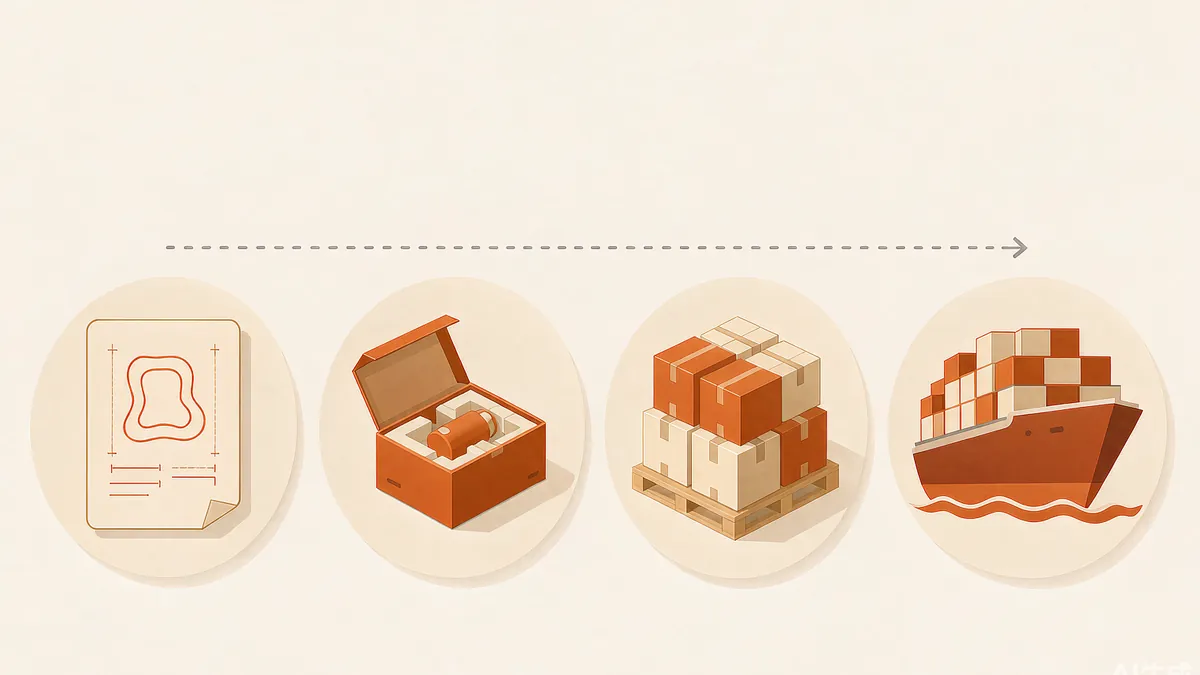
6. Commit with a pilot order. First production runs are where spec sheets meet reality — packaging fit, color consistency, the journey from approved sample to ten thousand units. A manageable first order is not timidity; it is the cheapest quality control you will ever buy.
If you have a spec sheet ready but no suppliers yet, the first-message guide shows how to open those conversations so factories actually reply.
Five Mistakes That Turn Discovery Into Dead Stock
Buying the picture. Rendered images describe an aspiration, not a product. The gap between the photo and the carton is where most disappointment is manufactured.
Anchoring on the lowest price. The cheapest quote usually prices a thinner spec — lighter material, simpler packaging, skipped testing. Compare quotes line by line against your sheet, or do not compare them at all.
Ignoring MOQ until after the sample. Buyers fall in love with a sample, then discover the minimum order is two seasons of inventory. Ask about MOQ and per-quantity pricing in the first exchange, not the last.
Skipping spec confirmation. "Same as the sample" is not a specification. If the production spec was never written down, the factory will make a judgment call on every ambiguous detail — and you will pay for each one.
Discovering compliance last. A product that cannot legally ship to your market has no price, no matter how good the quote. Requirements differ by destination and product type, so confirm them for the specific model early — ideally before the sample, not after the deposit.
How AllexTrade Runs Product Discovery for You
Everything above is doable alone if you have the time, the language and the factory relationships. Most buyers have one of the three. AllexTrade is a China product discovery and sourcing service built around the sequence in this article:
- Product discovery: you bring the shelf, the price band and the market — or a rough reference — and we work the channels above to surface candidate products that fit.
- Supplier sourcing: we identify and approach factories, and screened trading companies where they add value, to build to your spec.
- Specification and matching: we translate your requirement into a spec sheet suppliers can quote against, and match it to factories with the right tooling.
- Quotations and MOQ: we collect comparable quotes and commercial terms across suppliers.
- Samples and quality checks: we arrange samples, coordinate the evaluation, and coordinate quality inspection before and during production.
- Production and delivery coordination: we coordinate the production order, export logistics and delivery through to handover.
We are not a market research agency and we do not sell predictions. The process starts with what you can buy, at what cost, from suppliers who can actually build it — and the fastest way to start is to send us your product reference, target market and estimated quantity.
Request Product Discovery & Sourcing: send your requirement through our sourcing request form, or read more about how the service works. If you already have a shortlist and want the process around it, our step-by-step sourcing guide covers what happens after discovery.
Frequently Asked Questions
How can I find new products in China? Combine channels instead of relying on one search: online platforms for breadth, ranking and trend data for timing, and trade fairs, wholesale markets and factory visits for the products that have not become listings yet. Then screen every candidate with the same questions — use case, differentiation, cost ceiling, MOQ, freight and market requirements — before spending time on suppliers.
Is Alibaba the only way to find Chinese suppliers? No. Alibaba and 1688 are useful inputs — 1688 in particular reflects the domestic wholesale market — but they are indexes of existing listings. Factory new releases typically appear at trade fairs, in wholesale markets and inside industrial belts before they are easy to find online, and some of the best products never become a well-ranked listing at all.
Can a sourcing company help discover products? Yes. A sourcing service works from your shelf, price band and market instead of a product link: it surfaces candidates across channels, screens them against your economics, writes the spec sheet, approaches matching suppliers, and manages quotes, samples and the order. What you provide is the market knowledge — destination, price band, estimated quantity — that no supplier search can replace.
How do I move from product discovery to a real order? Shortlist three to five candidates, write a one-page spec sheet for each, send it to matched suppliers for comparable quotes, evaluate samples against the spec, then place a manageable pilot order. Each step converts discovery from an idea into evidence, and the spec sheet is the piece most buyers skip.
What should I prepare before contacting a sourcing company? A product description or reference image, required specifications, estimated order quantity, target purchasing budget, destination country, and any special requirements such as packaging or compliance documents. With those six items, a first discovery conversation can produce concrete candidates instead of generalities.
Small batch? That's our specialty.
AllexTrade negotiates low-MOQ production across screened factories. Tell us your product and target quantity and we'll come back with realistic options and prices — timing depends on how quickly suppliers respond.