
Two listings from the same TikTok Shop US snapshot, pulled side by side, say something quiet but useful about car interior accessories.
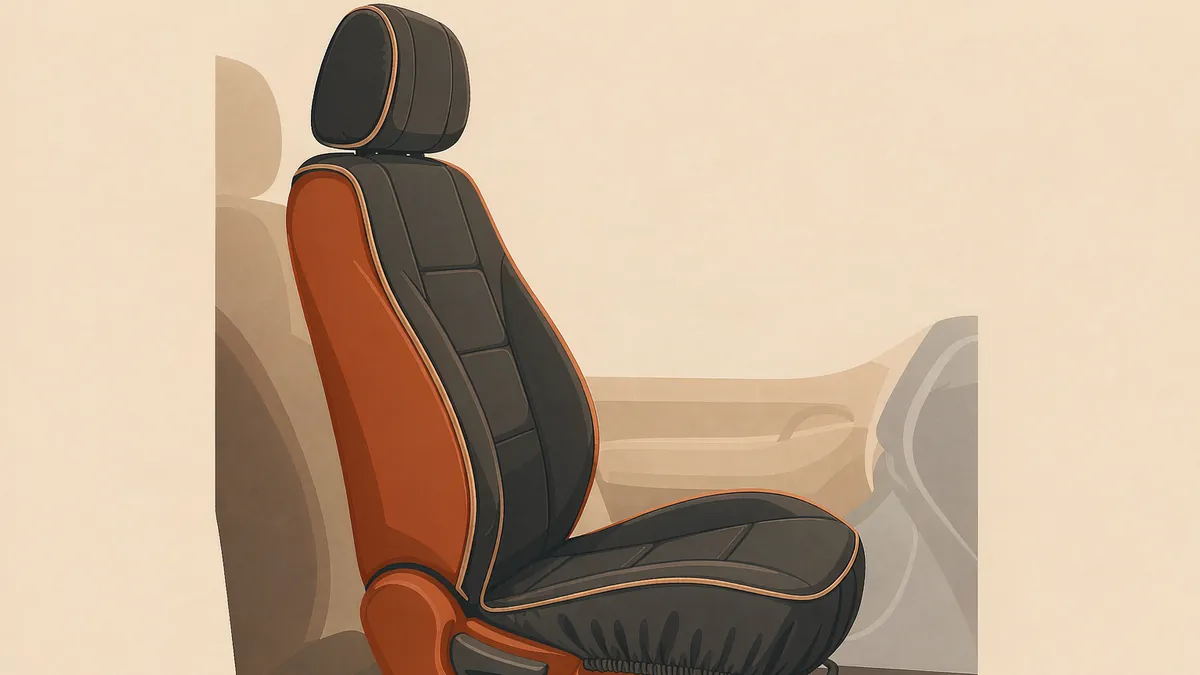
The first is a five-seat set of PU leather car seat covers: black, waterproof, universal fit, listed at USD 251.10. It sits at #2 on the new-releases chart and sold an estimated 870 units over the trailing 30 days. The second is a single Napa leather steering wheel cover at USD 25.80, #18 on the improving chart, moving an estimated 610 units over the same window.
One listing is nearly ten times the price and outsells the other in dollar value by roughly fourteen to one. That gap is not a story about price. It is a story about what a "complete, fitted solution" is worth compared to an accessory — and it frames the real question for anyone importing seat covers: not "how do I find the cheapest cover factory," but "how do I buy a fitted product that fits, deploys airbags correctly, and does not come back."
What the snapshot shows
The figures below come from our own snapshot of the TikTok Shop US charts, pulled 28 October 2026. Units are the platform's trailing 30-day cumulative sold counts — an estimate, not official reporting.
| Metric | 5-seat PU leather cover set | Napa leather steering wheel cover |
|---|---|---|
| Chart | #2, TikTok US new releases | #18, TikTok US improving |
| Listed price | USD 251.10 | USD 25.80 |
| Est. units, last 30 days | 870 | 610 |
| Listing value (units × price) | ~USD 218.5K | ~USD 15.7K |
| Average rating | 4.3 | 4.6 |
| Review count | 109 | 499 |
| First launch date | 2 May 2026 | 26 May 2025 |
| 30-day sales vs prior month | −32% | −38% |
| Downstream sellers on same item | 0 | 0 |
Two honest notes before drawing conclusions. First, the monthly listing value is units multiplied by the listed retail price — it is a demand-size indicator, not revenue booked, and it says nothing about margin. Second, both listings show 30-day sales down around a third versus the prior month. This is not a spike-chasing article. Seat covers are a steady, seasonal category, and steady categories are exactly where sourcing quality compounds: nobody is buying on novelty, so fit, finish and safety documentation decide who gets repeat orders. You can browse the current charts any time on our trending products page.
What "car seat covers" actually means
The phrase covers several different products, and factories specialize by type. Knowing which one you are buying is the first step to comparable quotes:
- Universal stretch covers. One pattern stretched over many seat shapes, usually elastic-backed fabric or thin leather-look material. Cheapest, widest market, weakest fit. They bag on contoured seats and this is the review section's favorite complaint.
- Semi-custom covers. A handful of patterns grouped by seat profile (bucket seat, bench, captain chair), with elastic and strap systems doing the adaptation. This is where most of the mid-market sits, including the trending five-seat set above.
- Custom tailored covers. Patterns cut per vehicle model, with exact openings for headrests, armrests, ISOFIX anchors and seat controls. Highest price, highest fitment risk, and a completely different sourcing conversation because the factory must hold a pattern library or develop patterns for your models.
- Singles vs sets. Single covers (driver seat, steering wheel) are accessories; five-seat and seven-seat sets are projects with more SKUs, more sewing operations and more failure points.
A car seat cover supplier in China will usually lead with what their sewing floor is set up for — it sits in the same automotive family as our car phone mount sourcing guide. Ask directly: how many patterns do you hold, what is your best-selling construction, and which vehicle models have you tooled for recently?
The airbag question comes before the fabric
Most modern cars carry side airbags mounted in the seat itself, and they deploy through the seat's side panel. A seat cover is sewn fabric wrapped around that panel. If the cover's stitching is too strong and has no designed release, it can interfere with deployment — which makes this the one feature of the product where a supplier's shortcut becomes your liability.
So before materials, before price, ask each factory:
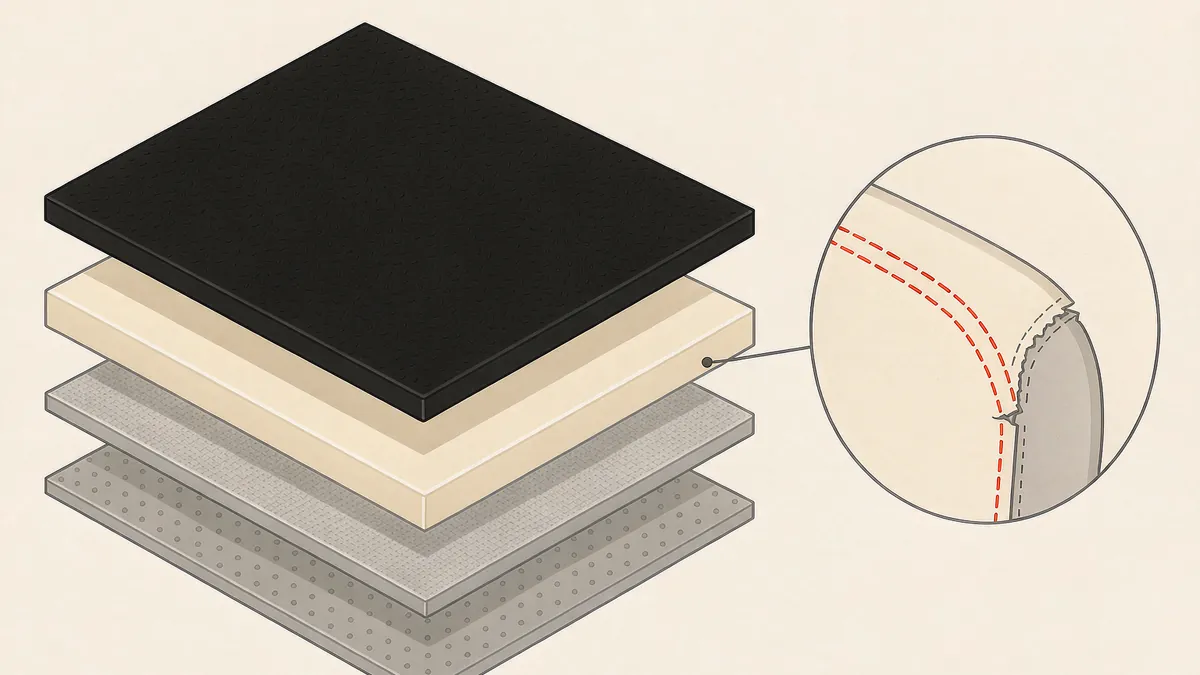
- How is an "airbag compatible" cover engineered? A real answer describes a deliberate weak point: a seam sewn with breakaway thread, a perforated tear line, or an open side panel design — plus which seat types it applies to.
- Can they show it? Ask for photos or samples of the airbag-side seam construction on both front seat covers.
- What do they NOT claim? A factory that says "all our covers are airbag safe, all cars" is selling confidence, not engineering. Compatibility depends on the seat design, not the cover alone.
If you resell into the US, this matters commercially too: covers marketed for vehicles with seat-mounted side airbags should be honest about what they are engineered for, and your product listing should not promise universal deployment safety. The cover label saying "airbag compatible" is a claim, not a test — which leads directly to the compliance section below.
Fitment is where the returns come from
Fitment failures, not fabric failures, generate most seat cover returns: covers that bag, slip, block a control, or fight the headrest. The practical checklist for specifying fitment:
- Decide universal vs tailored before asking for prices. A universal quote and a tailored quote are different products with different tooling and different return profiles.
- Openings. Headrest posts, integrated headrests, armrest pass-throughs, seatbelt buckles on benches, ISOFIX anchor access on rear covers, seat-height levers and heated-seat controls. Ask the factory to list every opening their pattern includes.
- Anchoring. How the cover fixes under the seat and around the back: elastic hem, hooks, velcro straps, or metal clips. Hooks scratch; loose elastic migrates.
- Sensors. Passenger occupancy sensors sit under some front cushions, and thick foam-backed covers can affect what they feel. A supplier who has sold into the US or EU will have met this problem before; one who has not, will learn it on your order.
- Reference seats. For tailored products, ask what the factory needs to develop a pattern — donor covers, seat dimensions, photos, or a physical seat. Their answer tells you how real their custom program is.
Materials and finish
- PU leather (polyurethane-coated fabric) is the category default: leather look, wipeable, softer and more flexible than PVC. Quality varies enormously with the coating weight and the base fabric; ask for the coating spec and backing material.
- PVC is cheaper and stiffer, and its classic failure is cracking in cold climates. If you sell into the Midwest and Northeast, cold-crack performance is a sample-test line, not a brochure claim.
- Fabric and mesh options trade wipeability for breathability and are common on the back rows of sets.
- Foam lamination (typically a few millimeters) gives the padded, upholstered feel that justifies higher prices — and adds bulk that matters for freight (more on that below).
- Perforations on leather-look covers add breathability in hot states; ask whether perforation is molded or cut, and whether it weakens the coating.
- Thread and stitching decide seam life: cheap polyester thread embrittles in sun, and single-needle seams on stress points let go within months. Double-needle on seating surfaces should be non-negotiable.
Flammability and documentation
Interior materials sold for vehicles in the US are expected to meet flammability requirements — the relevant benchmark is FMVSS 302, the federal motor-vehicle standard limiting the burn rate of materials in the occupant compartment (a maximum horizontal burn rate of 102 mm/min). Manufacturers of vehicles certify it; suppliers of aftermarket interior accessories are routinely asked by buyers to show test data demonstrating their materials meet the same benchmark, and serious cover factories hold such reports from accredited labs.
Three rules for handling this well:
- Ask for the test report, and read it. The material tested should match the material quoted — same fabric, same coating. A report for "similar material" is not your material's report.
- Do not treat a supplier certificate as certification. A PDF is a claim until you verify the lab, the report number and the tested specimen. This is the same discipline we apply to food-contact paperwork in our kitchen compliance guide: the document is the beginning of verification, not the end.
- Know what the standard does not cover. FMVSS 302 addresses flammability only. Airbag interaction, chemical disclosure (including California Prop 65 awareness for phthalates in vinyl components) and general product liability sit outside it. This article is sourcing guidance, not legal advice — confirm requirements for your specific listing and market with a professional where the stakes justify it.
What the factory conversation should cover
- MOQ by construction. Universal covers start low — often a few hundred sets. Tailored covers carry pattern development and per-model inventory, so MOQs are set per pattern or per model family. Get the MOQ quoted against your exact SKU list, not "seat covers" in general.
- Samples. Insist on a production-line sample, fitted to a real seat, not a stretched showroom piece. If the factory cannot fit the sample on a seat because they have none, that tells you what their fitment testing looks like. Our guide to evaluating a product sample before a bulk order walks the protocol.
- Packaging. Sets ship folded in polybags or color boxes. Ask whether vacuum compression is available — it cuts carton size dramatically on a bulky product.
- Customization. Logo embroidery, colorways, custom boxes and pattern development are separate line items with separate lead times. Price them individually.
- Lead time. Two clocks run: sewing capacity (fast) and pattern or packaging development (slower). Ask which one your order is waiting on.
- Comparability. Send every factory the same construction spec, same SKU list, same quantity. If shortlisting is the bottleneck, that is precisely what a sourcing request is for — we contact shortlisted factories with one identical brief so quotes come back comparable.
A sample checklist you can run yourself
No lab needed for round one — a weekend, two or three different cars, and discipline:
- Fit the set on two different vehicles (contoured bucket seat plus a flat bench if possible). Photograph every bagging point and gap.
- Install and uninstall three times. Note whether hooks scratch, elastic migrates, or straps loosen.
- Sit in it for an hour, then drive 30 minutes over rough pavement. Covers that walk and wrinkle will show it immediately.
- Check every opening: headrest, armrest, buckles, ISOFIX, levers, heated-seat buttons.
- Pull a seam by hand at the highest-stress corner. It should resist firmly and evenly.
- Inspect the airbag-side seam on both front covers. You should be able to identify the designed release point, or get a clear written answer about where it is.
- Rub a damp white cloth firmly across the surface (colorfastness) — dye transfer onto cloth or onto light interior trim is an instant return generator.
- Leave a cover overnight in a closed car, then judge odor cold. Strong chemical smell is a materials red flag.
- If you sell into cold climates, put a PVC sample in a freezer overnight and flex it. Cracks decide the season.
No sample passes everything perfectly. What matters is which failures show up, whether the factory can explain them, and what they commit to change in production.
The freight line nobody quotes
Seat covers are light but bulky, and ocean freight is charged on volume as much as weight. A five-seat set in a retail box can cube out a container long before it weighs one out — which is why vacuum compression, flat-fold construction and carton dimensions deserve a line in your quotation template. Ask suppliers to quote both vacuum-bagged and boxed packaging so you can see the freight difference yourself. For the same reason, compare quotes on the same packaging assumption or the comparison is meaningless — a subtlety that matters whenever you compare supplier quotations.
Frequently asked questions
Is a universal seat cover good enough to sell? It can be — universal stretch covers serve a real market at a lower price point, and the trending listing above is a universal set. But expect fitment complaints on contoured seats, and position the product accordingly. Semi-custom and tailored covers command higher prices precisely because fitment is the product.
Can I trust a cover labeled "airbag compatible"? Treat the label as a design claim, not proof. Ask the supplier how the airbag-side seam is engineered, get the construction documented, and inspect it on the sample. Covers are aftermarket products; the safety of a given combination of seat and cover depends on the seat design, so your listing should be precise about what the product is intended for.
What MOQ should I expect for custom-fit seat covers? Higher than universal, because each pattern needs development and holds inventory risk. Factories typically quote MOQs per pattern or per model family. Ask for the MOQ tied to your exact SKU list in writing.
Why do seat cover quotes vary so much between factories? Construction differences that are invisible in photos: coating weight on PU leather, foam thickness, double- versus single-needle seams, thread quality, hook hardware, packaging and pattern accuracy. That is why the quotes must be built from one identical specification before they mean anything.
Ready to source?
Looking for a reliable supplier for your car seat cover project? Send us your product reference, target market and estimated order quantity through our sourcing service — AllexTrade can help you explore suitable supplier options, compare quotations and arrange samples where available. You get a reply within 24 hours and screened supplier options with quotes typically in 3–5 business days, or bring the product straight to the quote form and we will take it from there.
Small batch? That's our specialty.
AllexTrade negotiates low-MOQ production across screened factories. Tell us your product and target quantity and we'll come back with realistic options and prices — timing depends on how quickly suppliers respond.