
Kitchen storage
Stackable Food Containers: US Demand & China Sourcing Notes
Data snapshot: 2026-11-04 · TikTok Shop US · Improvement Opportunities · #46 · back to live rankings
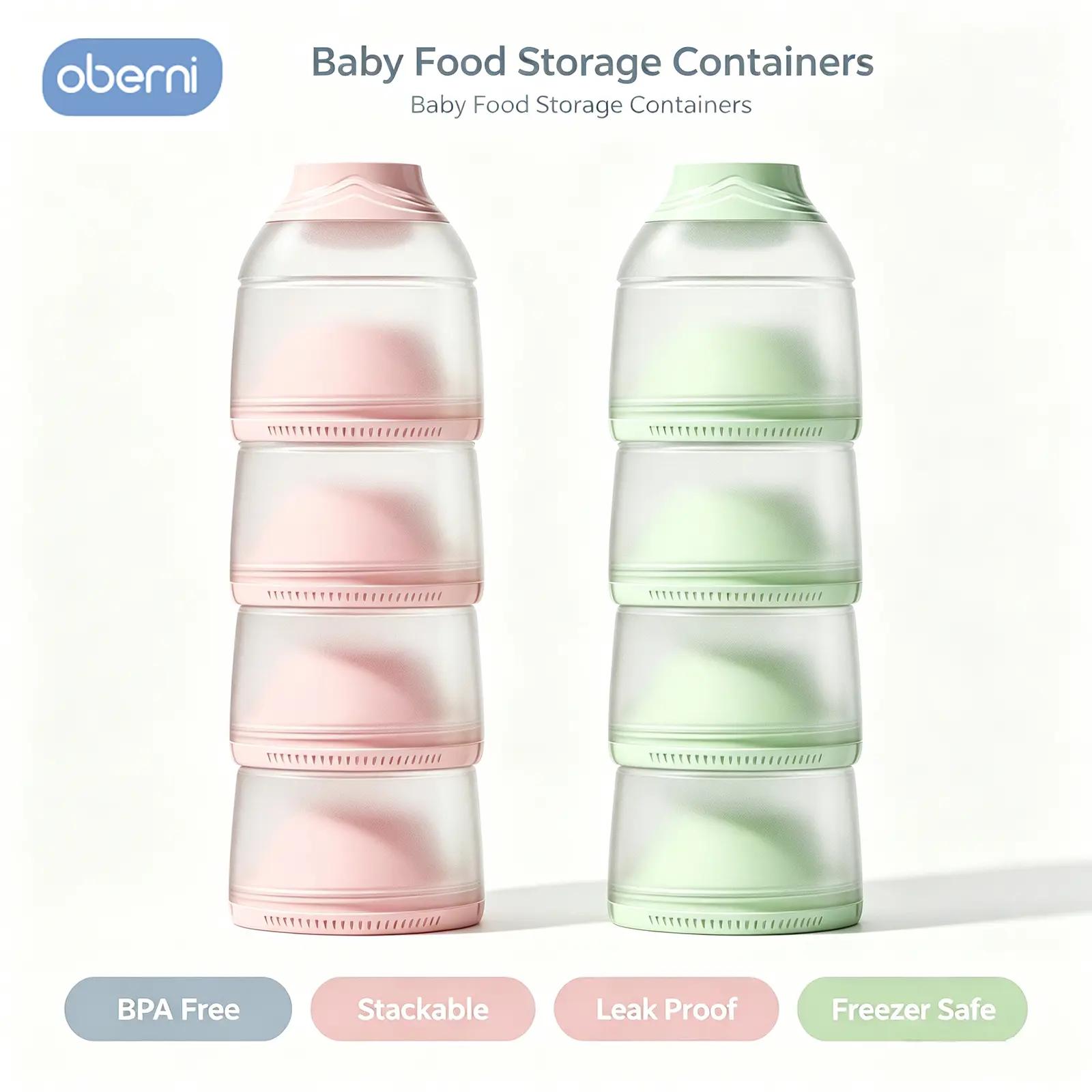
| Reference listing | Oberni 4-Layer Stackable BPA-Free Leakproof Non-Toxic Plastic Formula Container, Multi-Compartment Feeding Storage for Baby Travel, Travel-Fit Portable Organizer for Parents |
|---|---|
| Marketplace & list | TikTok Shop US · Improvement Opportunities |
| Rank in list | #46 |
| Retail price (reference) | $15.80 |
| Monthly sales | 808 |
| Month-over-month growth | +158% |
| Rating | 4.7 ★ (14 reviews) |
| Listed since | Jul 2026 |
| Opportunity score | 61/100 |
| Data collected | 2026-11-04 |
Retail reference price on the destination marketplace — not a sourcing price. Ranking aggregated from public marketplace data; verify the live listing before making decisions.
Stackable food containers live or die on two details: whether the stack actually seals when a layer is full of liquid or formula, and whether the plastic smells and looks "cheap" out of the box. Four-layer stackable dispensers — for formula, snacks, pantry goods — turn one SKU into a rotating-door repeat purchase for households with young children, which is why the format keeps spawning variants: twist-lock towers, side-lock clusters, dispenser-base stacks.
The item in this listing is a four-layer stackable, leakproof, BPA-free plastic container set positioned for formula and pantry storage. A 2026 launch with current monthly volume puts it in the growth window where design tweaks still move the needle — and the "improvement opportunity" signal (solid sales, room for a better rating) is exactly the profile worth studying before you copy the category default.
What the numbers say
The snapshot is an improve-list entry for a reason: #46 on the TikTok Shop US · Improvement Opportunities with 808 sets sold a month at a 4.7-star rating across 14 reviews means demand is proven and review complaints are your product roadmap. Launch timing matters too — live since Jul 2026, this SKU is early enough that a better-sealing or better-hinging variant can still take the same demand. Month-over-month movement of +158% tells you whether you are joining a wave or a plateau.
Spec checklist — confirm these with the factory
| Resin grade | Food-grade PP (polypropylene) is the default; confirm the specific grade and that it is certified for food contact — "BPA-free" alone is not a material spec |
|---|---|
| Seal design | Per-layer silicone gasket vs. molded lip seal; gaskets seal better but add a part and a cleaning step — test with liquid, not dry goods |
| Stack mechanism | Twist-lock, side-clip, or gravity stack; twist locks survive shipping better, clips are easier for elderly users |
| Capacity per layer | Confirm milliliters per layer and total; "4-layer" says nothing about volume |
| Lid hinge / spout | Pour spouts and flip lids are the common failure points — cycle-test 50+ openings |
| Transparency | Natural translucent PP vs. tinted; tinted hides stains but hides fill level too |
| Packing | Nested flat-pack vs. assembled stack; nested packs cut freight dramatically on bulky plastic |
What drives the cost
- Mold ownership — the decisive one: supplier-owned stock molds are cheap but your competitor can order the identical set; your own mold costs more upfront and locks in differentiation.
- Gasket material and assembly — silicone gaskets add a part, a labor step, and a leak-test station.
- Resin grade — virgin food-grade PP vs. regrind content; regrind in food-contact walls is a compliance and odor risk.
- Retail packaging — a printed color box carries most of the gifting value on this category.
Compliance & documentation
- US food contact: confirm FDA 21 CFR compliance documentation for the resin grade and any gasket material — ask for the food-contact test report by name, not a "food safe" sticker.
- BPA-free claims: only meaningful with a test report behind them; polycarbonate-free construction makes the claim easy to document.
- California Prop 65: confirm with the supplier for the resin and colorants used.
- Dishwasher/microwave claims: if the listing says dishwasher-safe, the resin grade and gasket must survive it — test before claiming.
QC checkpoints before shipment
- Liquid leak test: fill one assembled stack with water, invert for 10 minutes — dry goods testing hides seal failures.
- Odor check: unpack and sniff — regrind content announces itself; a plastic smell out of the box drives returns.
- Stack cycle test: assemble/disassemble 50 times; side-clip wear is the common failure.
- Drop test on assembled and nested configurations from retail-pack heights.
- Dimensional check per layer: stacking tolerance is where "won’t close properly" complaints start.
Who this fits
- Baby and toddler feeding brands extending from bottles into pantry storage.
- Home-organization brands building modular kitchen systems.
- Marketplace sellers chasing the proven improve-list profile: proven demand, fixable complaints.
FAQ
Should I use the supplier’s stock mold or build my own?
Stock molds get you to market in weeks at low MOQ, but anyone can order the same product — on an improve-list item, the differentiated move is usually your own mold with a better seal or hinge. A seller moving 808 sets a month can amortize a modest mold investment within the first order cycle; get two mold quotes and the modification scope in writing.
How do I actually verify "BPA-free and food-grade"?
Two documents, by name: the resin grade’s food-contact compliance (FDA 21 CFR reference) and a finished-goods test report for the specific colorant and gasket. "BPA-free" printed on a carton is a marketing claim; the report is the claim.
What MOQ should I expect?
Stock-mold sets often start around 500–1,000 sets; custom colors or your own mold typically start at 2,000–5,000 sets depending on cavity count. Current snapshot volume (808/month) supports a first order at the low end of either range.
Why do leakproof claims fail in reviews?
Because factories test with dry product and buyers test with formula. Write the leak test into the PO — liquid fill, inversion, 10 minutes — and require it per lot. It costs the factory minutes and saves the reviews that a 4.7-star average on this listing shows the category default has not solved.
Want supplier options for this product?
Send the requirement — our team screens factories, compares quotes and manages samples. Reply within 24 hours.